Hello everyone,
With Wave 2 announced by Archon Studio for the end of September, and with almost all Wave 1 pre-orders (excluding retail distribution) now shipped, we wanted to take a closer look at the units released in this first wave for each faction. After several weeks of beta testing and a large number of games, we now have enough experience to share our thoughts on the different units. While we look forward to discussing Wave 2 in more detail, we felt it would be worthwhile to first examine what the game already has to offer. We will also publish a second article dedicated to the Faction and Tactical Cards, as they play a major role in shaping each army’s strategy.
Although Archon Studio has already revealed the unit profiles for Wave 2, we have decided to wait until the official release before sharing our impressions. Unit profiles and cards may still change before launch, so we believe it is more meaningful to evaluate the final versions. We are starting this series with the Protoss, the faction we played throughout our testing sessions. The other factions were fielded by our fellow playtesters across many games, allowing us to develop a broader perspective on their strengths, weaknesses, and overall role within the game.
Our goal is not to produce a definitive tier list, but rather to share our experience from the tabletop. We hope this series will highlight the strengths, limitations, and synergies of each unit, helping both new and experienced players better understand how they perform on the battlefield.
Adepts:
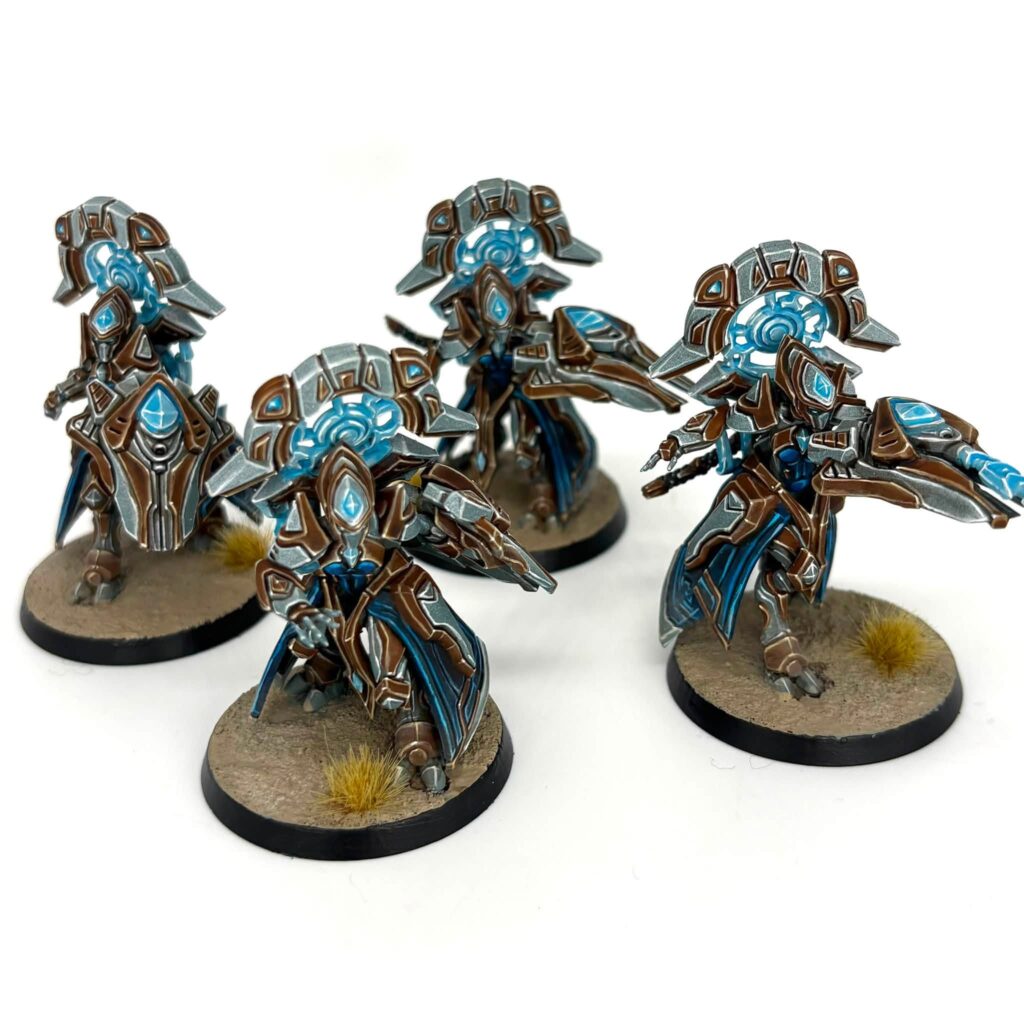
Adepts are a fragile but highly mobile unit that also has the advantage of being inexpensive in both Points and Supply. During our first few games, we weren’t particularly impressed with them, mainly because we hadn’t yet learned how to make the most of their abilities. After many more games, however, our opinion has changed considerably, and Adepts have climbed significantly in our rankings.
Their ability to deploy a Shade Token within 12″ is especially valuable. Any friendly unit targeting an enemy within 4″ of the token gains PRECISION (1), whether making ranged or melee attacks. Depending on the unit benefiting from it, this bonus can be extremely impactful. In addition, the Adepts may choose to teleport to the Shade Token, treating it as their unit leader. This mechanic provides outstanding mobility and allows them to project themselves directly into melee when needed. They can quickly engage and tie up enemy units with a Supply Value of 0 or 1, effectively disrupting the opponent’s plans.
On the other hand, Guidance, which grants ANTI-EVADE (2), currently feels rather situational. Units with an Evade value of 4 are still very uncommon in Wave 1, making this ability of limited value for now. It will likely become much more relevant as future expansions introduce additional unit types. At the moment, the Psionic Glaive’s built-in ANTI-EVADE (1) is generally sufficient.
We are also somewhat divided on Resonating Glaives. While the effect is useful, it requires spending even more Energy Points. Since Protoss armies are already extremely energy-hungry in Wave 1, spending 1 Energy to summon the Shade Token is often worthwhile, but investing another point to enhance the Adepts’ attacks is not always the most efficient choice. This upgrade will probably become more attractive once future units, abilities, or cards make Energy generation easier.
Overall, Adepts are an excellent harassment and tactical support unit. Their mobility forces opponents into difficult decisions while giving Protoss players tremendous positional flexibility. They can also draw enemy attention away from more valuable targets, buying precious time for Zealots to reach melee, where they truly excel.
Artanis:
Artanis is an absolute powerhouse on the battlefield and, in our opinion, probably the strongest of the three heroes currently available. At the start of his movement phase, he may teleport by swapping places with a friendly unit, which is then returned to reserve. Following the latest rules update, if the replaced unit was engaged in melee, Artanis does not become engaged automatically. This is because PLACE (0) is resolved during the Movement Phase, while making base contact through a PLACE effect is only allowed during the Assault Phase. Performing this action immediately ends his movement, so careful positioning is essential. A poorly timed teleport can leave him exposed to enemy fire before he has a chance to act. Fortunately, like all heroes, only a Critical Hit can penetrate his armour, making him exceptionally durable.
For 1 Energy Point, Artanis can also intercept ranged attacks targeting a friendly unit within 8″, using both his Armour and Evade to absorb the attack. This ability is invaluable for protecting fragile units such as Zealots, allowing them to reach melee intact and maximize their offensive potential.
Mobility is another of Artanis’ greatest strengths. Thanks to his Double Charge ability, he can cover an impressive distance across the battlefield. Although his second charge does not benefit from his six Impact Hits, it enables him to threaten targets far beyond the reach of a normal charge. In most cases, the initial charge alone will inflict around three wounds before he even begins making his regular attacks.
Finally, his two different weapon profiles make him an extremely versatile combatant. Whether facing infantry or armoured units, Artanis always has the right tool for the job. He will not necessarily destroy a vehicle or an infantry squad in a single activation, but he consistently deals enough damage to cripple heavy targets or finish off enemy units that have already taken casualties.
Praetor Guard:
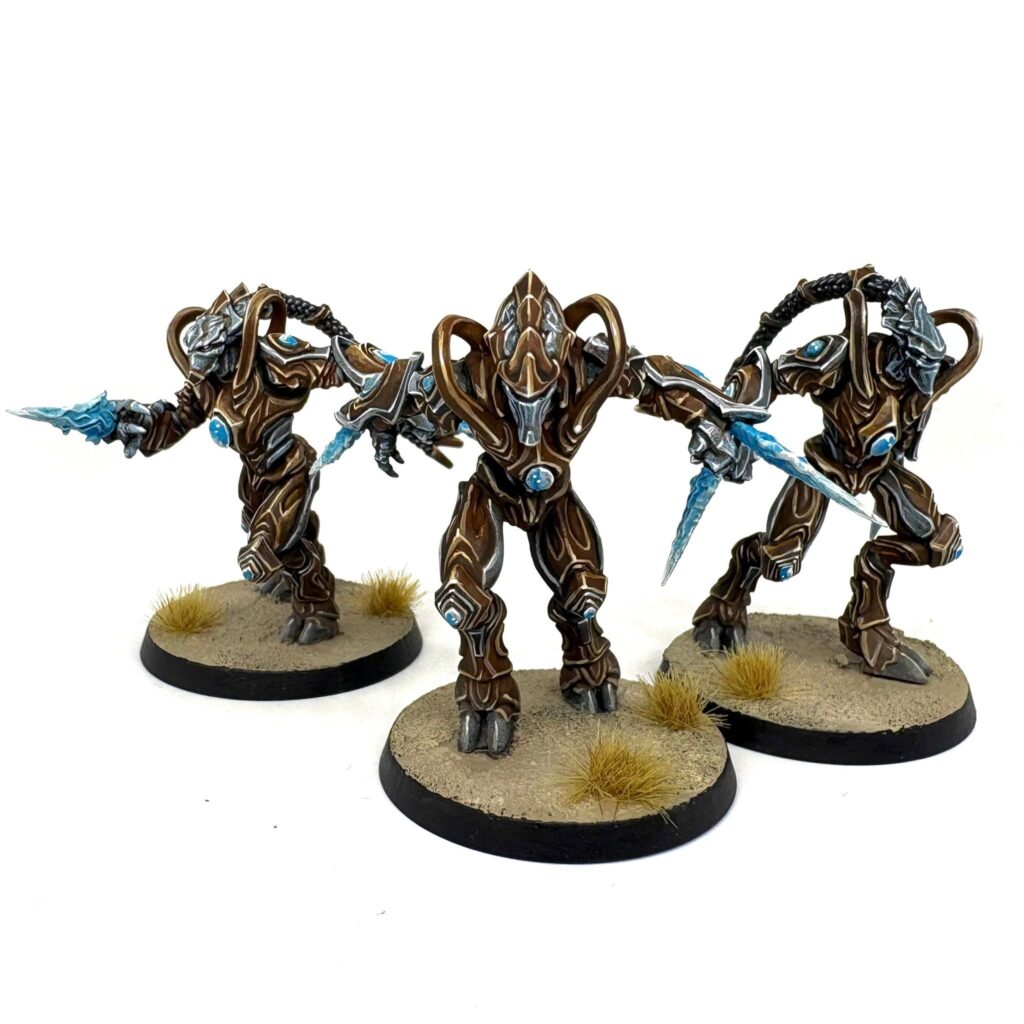
The design of StarCraft: Tabletop Miniatures Game suggests that each hero will eventually have their own unique support unit. If that proves to be the case, hero-less sub-factions such as the Daelaam may end up feeling slightly less appealing. The Praetor Guard, Artanis’ personal Zealot bodyguards, are one of these unique units and come with several powerful abilities built directly into their profile.
Their passive ability, Shield Overcharged, grants them Tough (2) on their first Armour roll each round. Combined with Precognition, which allows them to make their Evade roll as soon as they are targeted by an attack, they become remarkably resilient on the battlefield.
They are also surprisingly mobile thanks to Leg Enhancement and their Charge ability, which can be further enhanced through various Strategic Cards. Although they do not benefit from Surge against Armoured targets, they deal double damage to Size 3 units. In one of our games, this allowed them to bring down a Goliath surprisingly quickly through the sheer number of Impact Hits and melee attacks they generated. If you’re playing the Khalai sub-faction, it’s hard to justify leaving the Praetor Guard at home. They combine durability, mobility, and impressive offensive potential, making them an excellent frontline unit.
Pylon:
Another major strength of the Khalai sub-faction is the Pylon. Only one Pylon may be deployed at a time, but once active it allows you to deploy a nearby unit each round. The Pylon also provides an important support benefit by reducing the Energy Point cost of actions performed by nearby friendly units, making Energy management significantly more efficient throughout the game.
One thing quickly became apparent during our playtests: the Pylon immediately attracts the opponent’s attention. Since it serves as the Protoss deployment portal, it naturally becomes a priority target. However, with 8 Health and 2 Shields, destroying it requires a meaningful investment of attacks and resources. Every action spent eliminating the Pylon is an action that cannot be directed at your combat units, creating an interesting tactical dilemma.
Another major advantage is that the Pylon costs no army points and can simply be redeployed on the following turn if it is destroyed. In practice, losing it has very little long-term impact on the Protoss player, while forcing the opponent to commit valuable resources to removing it.
In every game where we played Khalai, our opponents made destroying the Pylon one of their top priorities. In the end, that alone proves its value: even when it is destroyed, it has often succeeded in distracting the enemy and consuming resources that could have been spent elsewhere.
Stalkers:
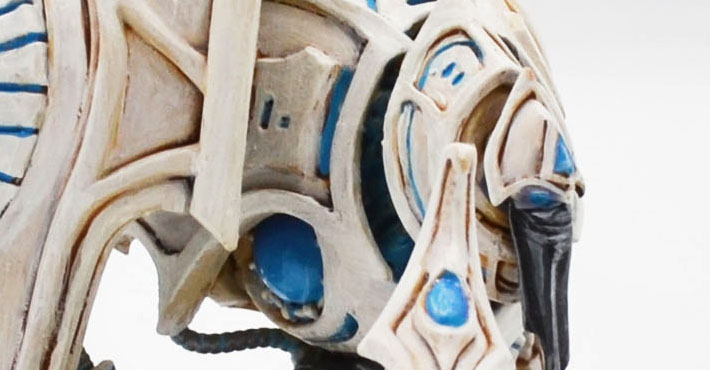
Stalkers are highly mobile Armoured units. Thanks to various synergies and their Blink ability, which allows them to perform a Place (6), they can quickly reposition themselves and, in the right circumstances, even open fire on the very first turn.
Their ranged firepower is solid and particularly effective against lightly armoured targets such as Marauders.
With the right upgrades, Stalkers can also become Hidden after performing an action, significantly improving their survivability. In addition, Fury of the Nerazim grants them Instant when targeting an enemy unit that has already activated. This creates an excellent defensive combination: Hidden Stalkers that are charged can fire before the attacker resolves its assault, potentially preventing the enemy from using a reaction and greatly reducing the effectiveness of the charge.
On the tabletop, Stalkers are an outstanding all-purpose unit. A single Stalker is surprisingly durable thanks to its personal Shield, while a squad of two offers much greater firepower without sacrificing mobility. Their 4″ Coherency allows them to spread out and control a large portion of the battlefield while remaining flexible in their positioning.
Zealots:
Zealots are dedicated melee units that become incredibly fast once upgraded, allowing them to cover impressive distances and engage the enemy with remarkable speed. Their offensive output is devastating against light infantry such as Marines and Zerglings.
With their upgrades, each Zealot can generate up to 4 Impact Hits in addition to its 4 standard attacks. This volume of attacks can quickly overwhelm even large enemy squads, especially after Adepts have already thinned out the lighter enemy units.
Their Zealous Resolve ability is another excellent defensive tool once they are engaged in melee. It reduces incoming damage by 2, at the cost of ending their activation for that Assault Phase. In practice, this drawback is minimal since Zealots have no ranged attacks—they remain fully available when the actual melee combat is resolved.
We are more divided on We Stand as One, however. This rule grants Precision (2) when a Zealot attacks an enemy already engaged by another friendly unit. While the effect is strong on paper, we found ourselves triggering it only rarely. StarCraft places a heavy emphasis on controlling objectives, and Protoss armies generally field relatively few units, making it uncommon to have multiple squads concentrating on the same target.
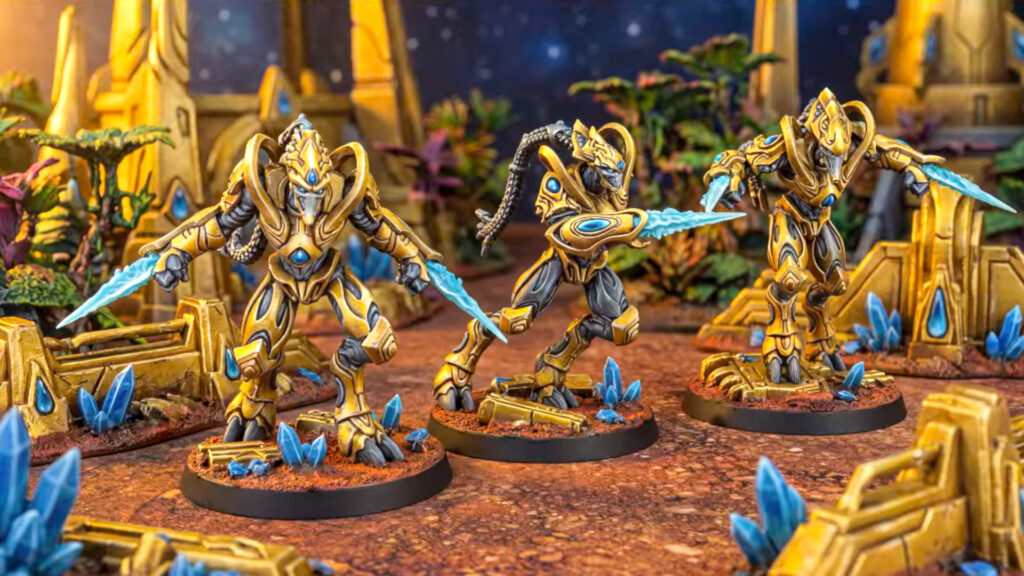
That concludes our thoughts on the Wave 1 Protoss units.
In our next article, we’ll take a closer look at the Faction Cards and Tactical Cards, which add another layer of strategic depth and deserve an analysis of their own.
Going forward, we’ll also publish a new article with each wave release, sharing our impressions of the latest units and discussing how they influence the evolving metagame.
Alongside these articles, we’ll also be sharing a video from Hiigytv, created as an extension of our work within the official playtest group. It provides a detailed overview of the game’s rules and serves as an excellent companion to our written articles for anyone looking to better understand the mechanics of StarCraft: Tabletop Miniatures Game.
As always, we’d love to hear your thoughts. Feel free to share your own experiences and opinions in the comments, we’re looking forward to discussing the game with the community!
Don’t missed to support us on PATREON!
Questions, ideas, spelling error or just want to share your thoughts? Leave a comment below! And if you enjoy our work, a little support would help us keep creating more and more content.
See you soon!